Authorized User Traps: The Hidden Costs and Credit Myths of Supplementary Cards
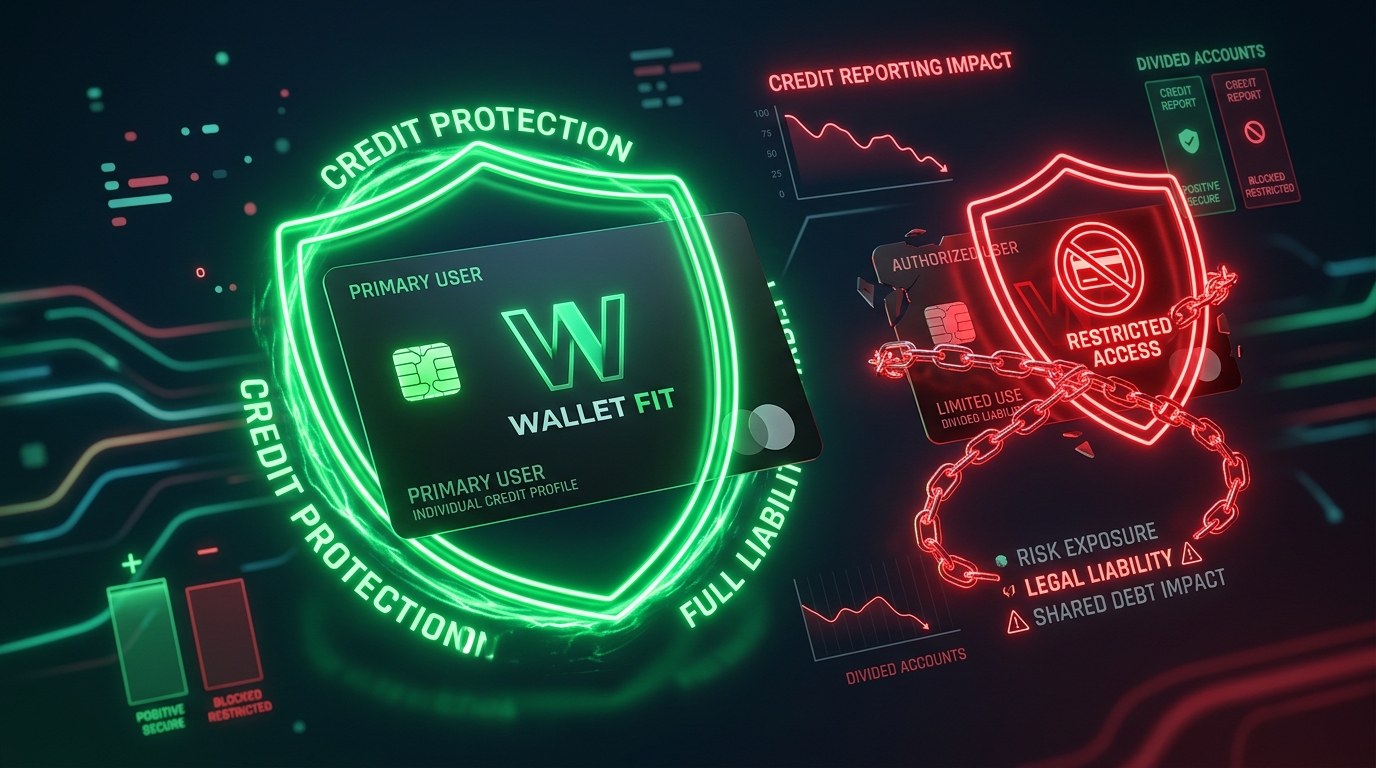
In the personal finance world, adding a family member as an "Authorized User" (often called a supplementary cardholder) is a standard practice. Parents do it to give their teenagers a card for emergencies, and couples do it to consolidate household billing. The prevailing belief is that it is a safe, easy way to help loved ones build credit.
However, in Canada, this practice is shrouded in misconceptions. Many of the credit-building rules that apply in the United States do not exist under Canadian banking regulations. From hidden annual fees to critical credit reporting differences and serious legal liabilities, supplementary cards can easily become a trap. Here is the mathematical and regulatory breakdown of Authorized Users (AUs) in Canada.
The Big Myth: Does a Supplementary Card Build Credit in Canada?
In the United States, credit bureaus practice "piggybacking." If a primary cardholder has a pristine payment record and adds their child as an authorized user, the credit history of that card is reported on the child's credit file as well. This is a common way for American teenagers to start adulthood with an established credit score.
In Canada, piggybacking does not exist.
Equifax Canada and TransUnion Canada do not report supplementary card payment history on the authorized user's credit file. Because the authorized user is not legally responsible for repaying the debt, the credit bureaus do not consider it their credit account. Here is the reality for Canadian cardholders:
- For the Authorized User: Swipe history, credit limits, and payment activity on a supplementary card have **zero impact** on their credit file. A teenager using their parent's supplementary card for five years will still graduate university with a completely blank credit history.
- For the Primary Cardholder: You remain 100% legally and financially responsible. If the authorized user drives up balances, it increases your credit utilization ratio, which can actually **lower** your credit score.
The Legal Trap: 100% Liability, 0% Control
When you sign the agreement to add an authorized user, you are agreeing to a highly one-sided contract. You are giving the supplementary cardholder full permission to charge purchases to your credit line, but you are not shifting any legal liability.
Consider the legal framework under Canadian bank agreements:
- No Legal Recourse via the Bank: If an authorized user spends thousands of dollars without your permission, you cannot claim it as fraud. The bank legally considers all of their purchases authorized by you. You must pay the statement in full. The bank will not pursue the authorized user for payment.
- Debt Collection Risk: If you refuse to pay for an authorized user's spending spree, the bank will report the delinquency on **your** credit report, send **your** name to collections, or take **you** to court—leaving the authorized user's financial record completely untouched.
Account Types Compared: Primary vs. Co-Applicant vs. Authorized User
Understanding the exact responsibilities of different account holders is essential. The table below outlines how Canadian financial institutions handle each type:
| Feature | Primary Cardholder | Joint / Co-Applicant | Authorized User (Supplementary) |
|---|---|---|---|
| Who is legally liable? | 100% Primary | Joint & Several (100% Both) | 0% Responsibility |
| Credit Bureau Reporting | Yes (Equifax & TransUnion) | Yes (Equifax & TransUnion) | No (Zero Impact) |
| Builds Credit Score? | Yes | Yes | No |
| Gets Welcome Bonus? | Yes | Sometimes (shares primary promotion) | No (Ineligible) |
| Annual Fee Cost | Full Fee ($120 - $599) | Full Fee (typically) | Reduced ($0 - $199) |
The Math of Supplementary Fees: A Loss of Rewards
Beyond credit reporting and legalities, supplementary cards are often financially inefficient. Banks charge annual fees to add supplementary cards, which eats into your net rewards. More importantly, using a supplementary card means your household is leaving huge welcome bonuses on the table.
Let's compare the math of two setups for a couple who wants to utilize the **American Express Cobalt Card**:
Scenario A: Primary + Supplementary Setup
- Partner A opens a Cobalt Card: $155.88/year.
- Partner A adds **Partner B** as an Authorized User: $50/year.
- Total Fee: $205.88/year.
- Welcome Bonus: 1x Welcome Bonus (approx. 30,000 points, worth $300).
- Spending Cap: They share a single $30,000 annual cap on the 5x eats & drinks multiplier.
- First Year Net Value: $300 bonus - $205.88 fees = **$94.12 net gain** (excluding raw points).
Scenario B: Two-Player Primary Setup
- Partner A opens a Cobalt Card: $155.88/year.
- Partner A refers **Partner B** to open their own Cobalt Card.
- Partner B opens a Cobalt Card: $155.88/year.
- Total Fee: $311.76/year.
- Welcome & Referral Bonus: 2x Welcome Bonuses (60,000 points) + 1x Referral Bonus (10,000 points). Total points: 70,000 points (worth $700).
- Spending Cap: They get two separate caps, allowing up to **$60,000 combined** on 5x eats & drinks.
- First Year Net Value: $700 bonuses - $311.76 fees = **$388.24 net gain** (an extra $294 in pure value).
Even though Scenario B pays $106 more in annual fees, they walk away with **almost $300 more in pure net value** in their first year. You can read more about coordinating this setup in our Two-Player Portfolio Strategy.
The Safer Alternatives
If you want to help a loved one build credit or manage household spending safely, there are far better alternatives to supplementary cards:
1. For Teenagers & Young Adults: Student Cards or Secured Cards
Instead of giving your child an authorized user card, have them apply for a dedicated student credit card in their own name once they turn 18 (or the age of majority in their province). Student cards require little to no income history. If they cannot qualify, a **Secured Credit Card** (where you provide a deposit as the credit limit) is a 100% guaranteed way to build a real credit file with Equifax and TransUnion without risking a spending spree.
2. For Everyday Family Budgets: Reloadable Prepaid Cards
If you want to give a family member a card to buy groceries, use a reloadable prepaid card like the **EQ Bank Card** or **Wealthsimple Cash Card**. Because you must load funds onto these cards beforehand, there is zero risk of an unapproved spending spree. Both have $0 annual fees, charge no foreign exchange markups (perfect for trips, as detailed in our World Cup Travel Guide), and keep your primary credit limit secure.
3. For Couples: Staggered Primary Applications
Do not merge everything into one primary account. Stagger your applications so you can earn separate welcome bonuses and refer each other. Check out our Annual Fee Analysis to determine which cards are worth paying double fees for.
Frequently Asked Questions
Does being an authorized user build credit in Canada?
No. Unlike in the United States, Canadian credit bureaus (Equifax and TransUnion) do not report supplementary card history on the authorized user's credit file. It has zero impact on their credit score.
Who is legally responsible for purchases made on a supplementary credit card?
The primary cardholder is 100% legally and financially responsible for all purchases made by an authorized user. The bank will not pursue the authorized user for payment if they overspend.
Is it better for couples to use a supplementary card or get separate cards?
It is usually better to get separate primary cards. This allows both partners to earn separate welcome bonuses and referral bonuses, which mathematically outweighs the cost of the extra annual fee.
How can teenagers build credit if supplementary cards don't work?
Teenagers should apply for a dedicated student credit card in their own name once they reach the age of majority. If they don't qualify, a secured credit card is a guaranteed way to build a real credit file.
Maximize Your Rewards with WalletFit
Never guess which card to swipe. WalletFit optimizes your rewards in real time, tracks spending caps, and alerts you before statement credits expire.