How to Optimize Recurring Bills on Canadian Credit Cards (2026)
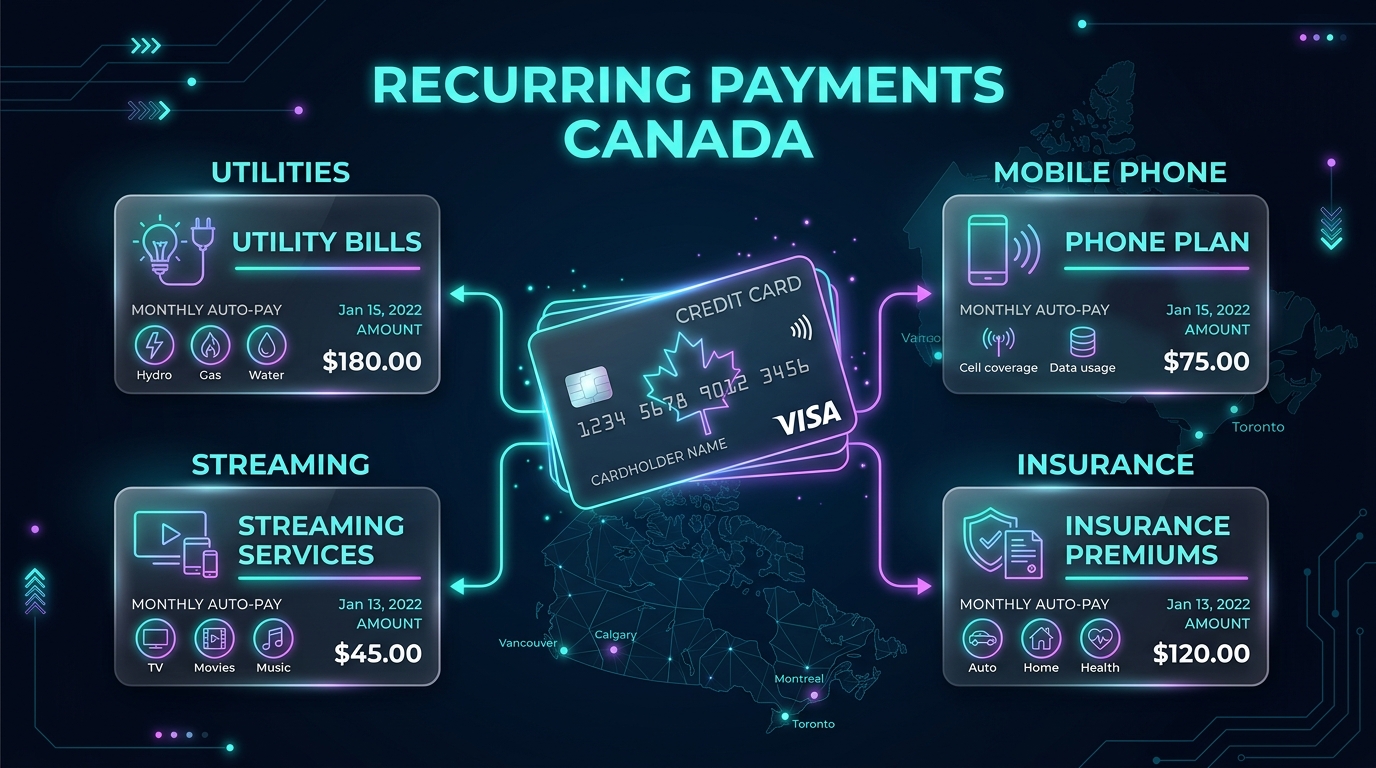
Most credit card strategies focus on transactional spending: groceries, gas, dining, and travel. While these categories are excellent for optimization, they are highly variable. You might dine out less in a busy month, or drive less during a vacation. But there is a silent category of credit card spending that remains completely predictable: your recurring bills.
Phone plans, internet, home and auto insurance, utility bills, streaming subscriptions, and gym memberships represent a massive portion of the average Canadian household budget. Despite their predictability, many people let these bills autopay from a chequing account or a card earning a basic 1% rate. By shifting these expenses to a dedicated card with a strong recurring bill multiplier, you can easily capture over $300 in passive cashback every year with zero change to your lifestyle.
💰 Property Tax Hack: Learn how to earn rewards on billers that don't accept standard credit cards with our Triangle Mastercard property tax hack guide.
What Counts as a Recurring Bill in Canada?
Credit card networks (Visa and Mastercard) identify transactions using Merchant Category Codes (MCCs). For a purchase to trigger a "recurring bill" multiplier, the merchant must set up the payment as a pre-authorized recurring transaction. A one-time manual payment on a service provider's website will usually code as a standard service purchase rather than a recurring bill.
Common expenses that can code as recurring bills include:
- Telecommunications: Cell phone bills (Rogers, Bell, Telus, Koodo, Fido) and internet services.
- Utilities: Electricity, natural gas, and water (where credit card payments are accepted without exorbitant convenience fees).
- Streaming & Subscriptions: Netflix, Spotify, Disney+, YouTube Premium, iCloud storage, and software subscriptions.
- Insurance: Home and auto insurance policies that allow monthly credit card autopay.
- Memberships: Gyms, specialized clubs, and monthly subscription boxes.
The Math: Earning $300+ Annually on Autopilot
To see how easily these rewards accumulate, let's model a typical Canadian household's monthly recurring bill commitments. By moving these payments from a basic 1% cashback card to the Scotiabank Momentum Visa Infinite Card (which offers 4% cashback on recurring bills) or the TD Cash Back Visa Infinite Card (which offers 3%), the net difference becomes substantial.
| Bill Category | Monthly Spend | Basic Card (1%) | TD Cash Back (3%) | Scotia Momentum (4%) |
|---|---|---|---|---|
| Internet & TV | $140 | $1.40 | $4.20 | $5.60 |
| Mobile Phones (x2) | $160 | $1.60 | $4.80 | $6.40 |
| Streaming (Netflix, Spotify, iCloud) | $60 | $0.60 | $1.80 | $2.40 |
| Auto & Home Insurance | $220 | $2.20 | $6.60 | $8.80 |
| Utilities (Electricity & Gas) | $150 | $1.50 | $4.50 | $6.00 |
| Monthly Total | $730 | $7.30 | $21.90 | $29.20 |
| Annual Return | $8,760 | $87.60 | $262.80 | $350.40 |
By simply setting up pre-authorized payments on the Scotiabank Momentum Visa Infinite, this household nets $350.40 per year on expenses they have to pay anyway. Subtracting the card's $120 annual fee (which is often waived in the first year), the user is still up by $230.40 purely on passive bills. When combined with grocery spending (another 4% category on the Scotia card), the card's profitability skyrockets.
Best Credit Cards for Recurring Bills in Canada
1. Scotiabank Momentum Visa Infinite Card
This is the reigning champion for recurring bills in Canada, offering an unmatched 4% cashback. However, users must be aware of the annual category cap: the 4% rate applies to a combined maximum of $25,000 in annual spending across groceries and recurring bills. Once you cross this threshold, the earn rate drops to 1%.
2. TD Cash Back Visa Infinite Card
Offering a solid 3% cashback on recurring bills, gas, and groceries, this card is highly competitive. A unique advantage is that TD provides a free Deluxe TD Auto Club membership, which offsets the value of the annual fee if you do not already have roadside assistance.
3. Tangerine Money-Back Credit Card
For those who prefer a no-fee card, the Tangerine Money-Back Credit Card is an excellent choice. It allows you to select up to three spending categories to earn 2% cashback with no cap, and "Recurring Bills" is one of the available choices. The cash back is deposited monthly directly into a Tangerine savings account, allowing you to compound your rewards automatically.
Pitfalls to Avoid
1. Third-Party Convenience Fees
While many service providers (telecom, insurance, streaming) allow credit card payments for free, some utility companies and municipalities charge a processing fee (often 1.5% to 2.5%) for credit card transactions. If a utility company charges a 2% convenience fee, using a 3% cashback card only nets you 1%, and using a 1% card actually costs you money. Always check the fee structure before setting up auto-pay.
2. Account Overlaps and Caps
If you run a multi-card setup to optimize your return, you must make sure your recurring bills don't crowd out other high-yield categories. For example, if you spend heavily on groceries and hit the Scotiabank Momentum's $25,000 cap early in the year, you should redirect your recurring bills to a secondary card to maintain a high yield. This is where using a tool like Wallet Fit helps by algorithmically calculating your optimal allocation based on your exact monthly expenditures.
3. Carrying a Statement Balance
Credit card rewards are only profitable if you pay your statement in full every single month. Carrying a balance at an interest rate of 19.99% or higher will completely erase any cashback earned within days.
How to Get Started
- Log in to your telecom, utility, and insurance portals.
- Update the payment method to your optimized recurring bill credit card.
- Ensure the option for "pre-authorized automatic payment" is active so the transaction is flagged correctly by the payment processor.
Frequently Asked Questions
What counts as a recurring bill for credit card rewards in Canada?
Recurring bills are pre-authorized payments like cell phone bills, internet, streaming subscriptions, home/auto insurance, and gym memberships. They must be set up as automatic payments to trigger the recurring bill multiplier on your credit card.
Which Canadian credit card is best for recurring bills?
The Scotiabank Momentum Visa Infinite Card is a top choice, offering 4% cashback on recurring bills and groceries. Another strong option is the TD Cash Back Visa Infinite Card, which offers 3% cashback.
Should I put utility bills on my credit card?
You should only put utility bills on your credit card if the provider does not charge a convenience fee, or if the fee is lower than your card's cashback rate. Some municipalities charge a 1.5% to 2.5% processing fee, which can negate your rewards.
How does WalletFit help optimize recurring bill payments?
WalletFit algorithmically calculates your optimal card allocation based on your monthly spending to ensure your recurring bills don't exceed category caps. This helps you maximize cashback and maintain a high yield across all your credit cards.
Maximize Your Rewards with WalletFit
Never guess which card to swipe. WalletFit optimizes your rewards in real time, tracks spending caps, and alerts you before statement credits expire.