Cash Back vs. Travel Points: The Definitive Math Guide
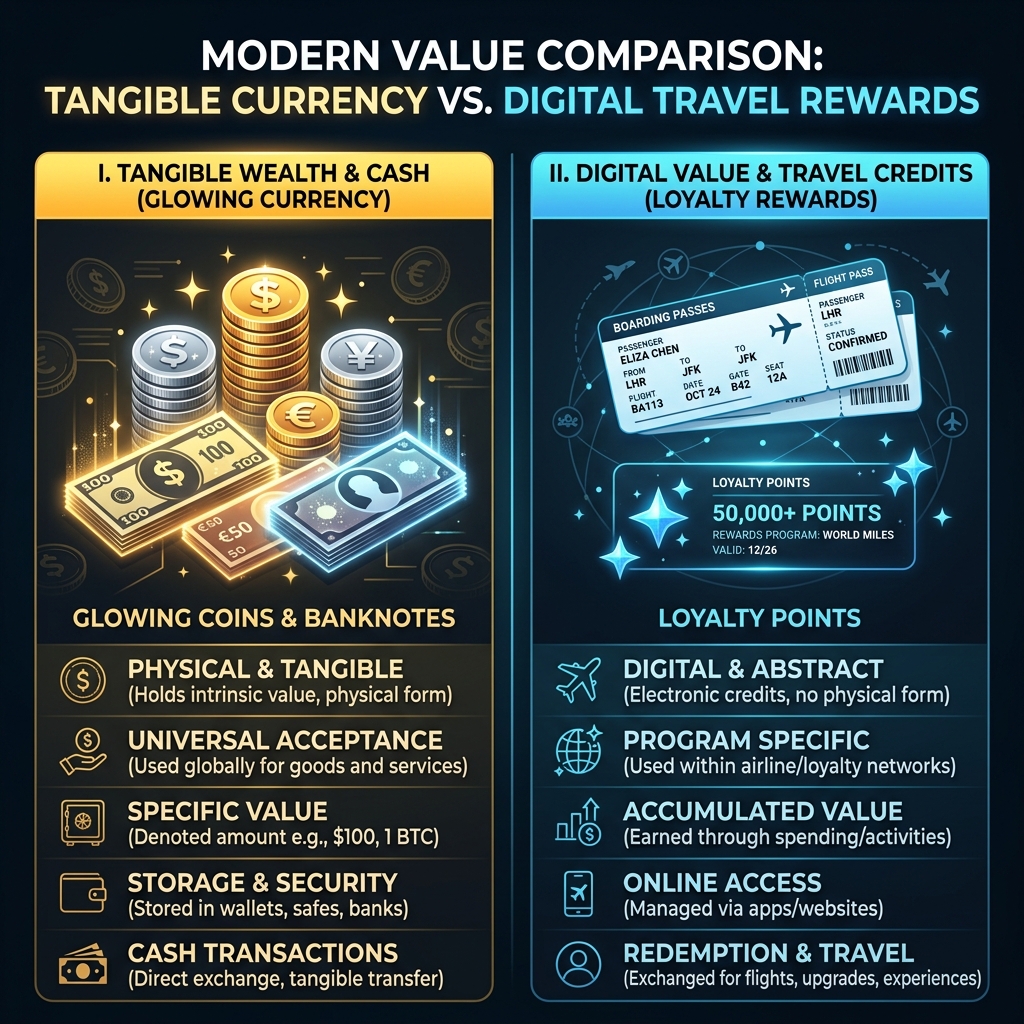
When assembling a credit card wallet, Canadians are forced to answer a fundamental question: **Should I earn cash back or travel points?**
Cash back is clean, simple, and guaranteed. Statement credits don't suffer from hyperinflation, and you never have to search for award availability. Points (such as Aeroplan, Scene+, and Amex MR), on the other hand, are highly complex but offer massive **leverage**—meaning you can redeem them for rewards worth far more than the nominal cash value of your spend.
To end the debate, we have run three typical Canadian spender profiles through the **Wallet Fit** recommendation engine. Here is the mathematical verdict.
Profile 1: The High-Spending jetsetter
Spending Profile: $5,000 per month ($1,500 groceries & dining, $1,000 travel, $1,000 gas/transit, $1,500 general shopping). Travel frequency: 3+ trips annually (including international flights).
By pairing the **Amex Cobalt** (5x eats & drinks) with the **Amex Gold** (2x travel/gas) and the **TD Aeroplan Visa Infinite Privilege** (1.25x base, airport priority, unlimited lounge access), this cardholder amasses **142,000 Aeroplan points** annually.
- Annual Fees Paid: $156 (Cobalt) + $250 (Gold) + $599 (Privilege) = $1,005 total.
- Gross Reward Value: At a 2.0¢/point valuation (redeemed for business class flights), 142,000 points = **$2,840**.
- Net Travel Value: $2,840 - $1,005 fees = **$1,835 net return** (plus lounge visits valued at $400+).
- Best Cashback Alternative: Earns a flat 2.0% average back on $60,000 spend ($1,200) minus fees = ~$1,100 net return.
Verdict: Travel points win by **$735+ annually**.
Profile 2: The Suburban Family
Spending Profile: $3,200 per month ($1,000 groceries, $500 gas, $400 recurring bills, $1,300 retail/general). Travel frequency: 1 domestic road trip or flight per year.
This spender avoids travel portals and values liquid cashback. Their optimized wallet features the **CIBC Dividend Visa Infinite** (4% gas and grocery, up to $20,000) and the **Rogers Mastercard** (2% cash back everywhere, boosted to 3% when redeemed on Rogers bills).
- Annual Fees Paid: $120 (CIBC Dividend) + $0 (Rogers Mastercard) = $120 total.
- Everyday Cash Return: $1,000 grocery/gas @ 4% ($720/yr) + $400 bills @ 3% ($144/yr) + $1,300 retail @ 3% ($468/yr) = **$1,332** cash.
- Net Cash Value: $1,332 - $120 fees = **$1,212 net return** in actual bill discounts.
- Best Points Alternative: At a 1.2¢ economy flight redemption rate, the net points value after high annual fees is only ~$1,020.
Verdict: Cash back wins by **$192 annually** due to liquidity and lower fee drag.
Profile 3: The Budget student / Low Spender
Spending Profile: $900 per month ($300 groceries, $100 transit/rideshare, $500 general). Travel frequency: No regular flights.
Paying annual fees makes no sense on low budgets. This spender uses the **Tangerine Money-Back Credit Card** ($0 fee, 2% back on groceries, transit, and drugstores) and the **Simplii Financial Cash Back Visa** ($0 fee, 4% back on restaurants/dining).
- Annual Fees Paid: $0 total.
- Net Cashback Yield: Averaging **2.3% cash return** across categories, yielding **$248** in statement credits.
Verdict: Cash back wins decisively. Points cards require heavy spending to offset fees.
Choose Cash Back if: Your monthly card spend is under $2,000, you shop mostly at Costco or No Frills (which don't accept Amex), or you travel less than twice a year.
Choose Points if: Your monthly spend is over $2,000, you are comfortable using transfer partners, and you prefer flying in premium cabins or booking short-haul flights.
Let Wallet Fit Settle the Debate
Stop relying on general advice. When you link your bank history to **Wallet Fit**:
- Our calculator simulates your exact transactions under a Cashback model and a Points model.
- It matches the results against your real-world travel preferences.
- It tells you with decimal precision which system earns you more value.
Frequently Asked Questions
How do I calculate the net value of a travel points card?
You calculate the net value by multiplying your total points by your average redemption value (e.g., 2.0 cents for Aeroplan), and then subtracting the total annual fees you paid for the card.
Why might cash back be a better option for some families?
Cash back offers immediate liquidity and often involves lower or zero annual fees. For families with moderate spending who don't travel often, the lower fee drag often results in a higher net return than points cards.
When do travel points decisively beat cash back?
Travel points win when you pair a high-earning card (like the Amex Cobalt) with premium redemption options, such as business class flights, generating significantly more value than flat cash back.
How does WalletFit calculate the winner for my spending?
WalletFit runs your exact transactions through a simulator to compare your net return on a cash back setup versus a points setup, determining with decimal precision which strategy is most profitable for you.
Maximize Your Rewards with WalletFit
Never guess which card to swipe. WalletFit optimizes your rewards in real time, tracks spending caps, and alerts you before statement credits expire.